
Last updated October 30, 2026
DIY vs Professional ADU: The Newport Beach Homeowner’s Decision Guide
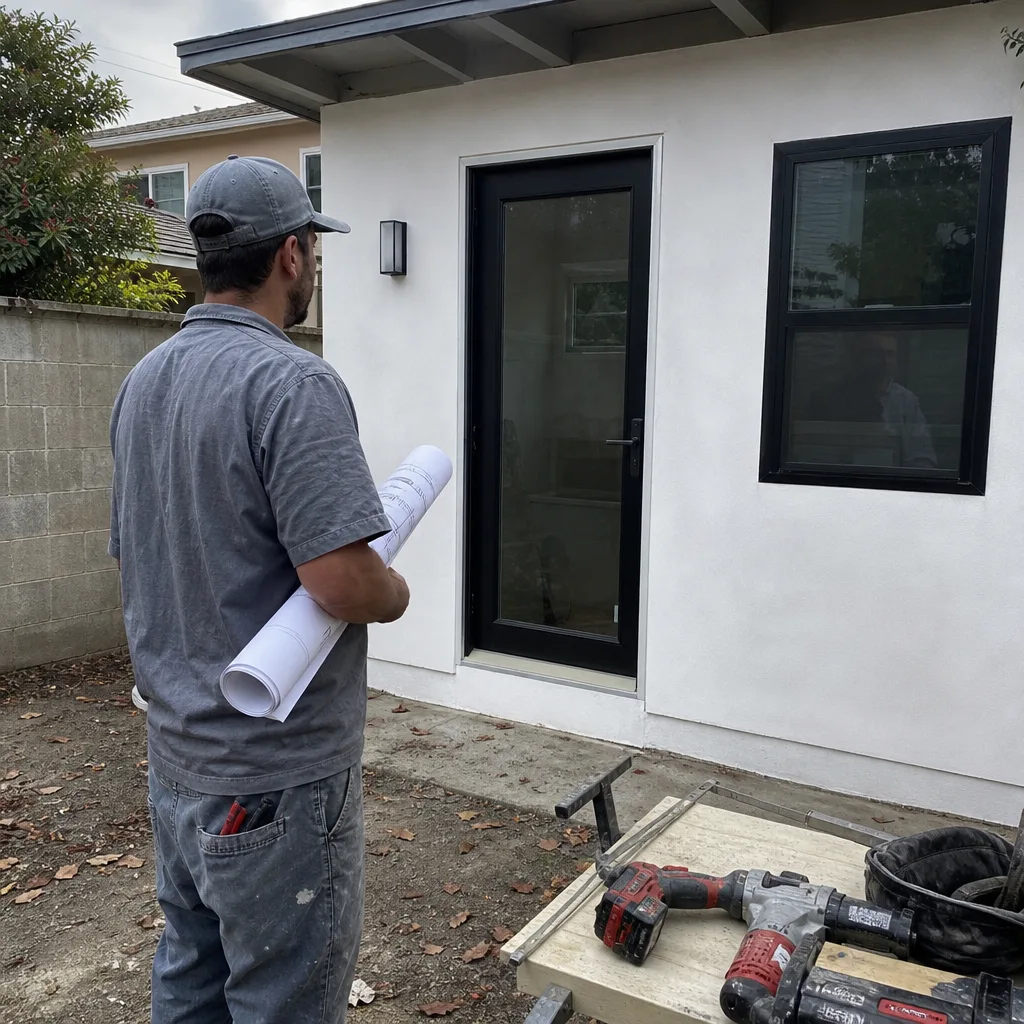
The DIY-versus-professional ADU debate usually centers on skill: can you frame a wall, run a wire, hang drywall? But in Newport Beach, that’s the wrong question. The real question is what California law and the city’s permitting process actually allow an owner-builder to do, and whether the savings survive contact with coastal soil, marine moisture, and seismic detailing requirements. We’ll walk through the owner-builder permit, the 3-year resale restriction, where DIY work gets legally impossible, and what you can still handle yourself without risking your warranty or your permit.
Quick Answer
Most Newport Beach homeowners should hire a professional ADU contractor for structural, electrical, plumbing, and foundation work, while reserving finish work like painting, landscaping, and some interior trim for themselves. For guidance on selecting the right professional, see our How to Hire a ADU Contractor in Newport Beach: A Step-by-Step Guide. California allows owner-builder permits, but they carry a 3-year resale restriction and legally require you to either do the work yourself or hire licensed subcontractors you directly supervise. For a coastal lot with Newport Beach’s soil and moisture conditions, the financial downside of a DIY mistake typically exceeds the savings.
Table of Contents
- What California’s Owner-Builder Law Actually Allows
- The 3-Year Resale Restriction Nobody Mentions
- Why Newport Beach Lots Make DIY Riskier Than Inland Projects
- The Real Cost Comparison: DIY vs Professional ADU
- The Hybrid Approach: Where Homeowners Can Legitimately Save Money
- What Warranty Protections Mean for a 30-Year Asset
- How to Decide: A Step-by-Step Framework
- Common Mistakes to Avoid
- When to Call a Professional
- Frequently Asked Questions
- The Bottom Line
What California’s Owner-Builder Law Actually Allows
California Business and Professions Code 7044 lets homeowners act as their own general contractor on their primary residence. That means you can pull an owner-builder permit for an ADU on your Newport Beach property without holding a contractor’s license. What the law does not let you do is hire unlicensed workers to do the work under your permit, or hire a “consultant” who effectively acts as your contractor while you sign the forms. If you pull the permit, you are legally the contractor. That means you’re responsible for worker safety, code compliance, scheduling inspections, and the quality of every subcontractor you bring on.
But here’s the part most YouTube tutorials skip. Any worker you pay more than $500 total must be a licensed contractor in their trade, or a bona fide employee with workers’ compensation coverage. You cannot have a handyman frame your ADU under your owner-builder permit in California. That’s not a gray area; it’s a violation of state law with fines for you, not the worker. Electricians, plumbers, and HVAC technicians must hold state licenses regardless of who pulls the building permit. So what you actually “do yourself” under an owner-builder permit in Newport Beach is limited to work you personally perform, plus subcontracting to licensed trades at retail rates.
In practice, most Newport Beach homeowners who pull owner-builder permits end up acting as unpaid project managers while paying licensed subcontractors directly. That’s a full-time job during construction, and it requires real knowledge of sequencing, code requirements, and inspection protocols.
The 3-Year Resale Restriction Nobody Mentions
California law restricts the sale of any structure built under an owner-builder permit for three years after the certificate of occupancy is issued. This isn’t a suggestion; it’s a legal limitation baked into the property record. If you build an ADU under an owner-builder permit in Newport Beach and decide to sell the house 18 months later, you cannot legally transfer that ADU with the property without either waiting out the clock or going through a costly and discretionary exception process.
This restriction matters more in Newport Beach than in most markets because property here changes hands frequently. People relocate for work, divorce happens, estates get settled, or a better opportunity appears. Locking your property into a 3-year no-sale window changes your financial flexibility in ways most DIY calculators don’t price in. It can also complicate refinancing, since lenders reviewing the property may flag the owner-builder designation and require additional documentation or holdbacks.
A professional contractor’s permit carries no such restriction. The structure is built by a licensed entity, and the property remains as transferable as any other. For homeowners who view the ADU partly as an asset that adds resale value, the owner-builder restriction is a hidden cost that rarely shows up in budget spreadsheets.
Why Newport Beach Lots Make DIY Riskier Than Inland Projects
Newport Beach is not a generic California suburb. The soil conditions, the marine climate, and the city’s coastal building requirements create failure points that inland builders never encounter. Our Seasonal ADU Care for Newport Beach: Year-Round Homeowner’s Guide covers how to protect your investment against these coastal challenges. The moisture exposure from ocean air accelerates corrosion on improperly flashed connections. The soil on many Newport Beach lots, especially on the Balboa Peninsula and in older sections of town near the bay, contains high levels of salt and organic material that complicate foundation design. The seismic zone adds another requirement layer for shear walls, hold-downs, and foundation anchoring.
We’ve seen owner-built ADUs in Newport Beach where the foundation was poured to a generic California standard, only to crack within two years because the soil’s expansion rate wasn’t accounted for in the design. That’s a fix that can exceed the original savings several times over. Coastal moisture also means that a single missed flashing detail or an improperly sealed penetration becomes a mold and rot problem much faster than it would in Riverside or Sacramento.
Newport Beach also has specific design review processes that vary by neighborhood, including Balboa Island, Lido Isle, and various HOA communities. An owner-builder facing a design review board without professional drawings and a documented compliance plan often burns months of time and multiple resubmission fees.
The Real Cost Comparison: DIY vs Professional ADU
The headline number in DIY ADU discussions is typically “save 30 percent by acting as your own contractor.” In Newport Beach, that math rarely survives contact with the actual permitting costs, inspection fees, subcontractor rates, and correction work. Here’s a realistic breakdown for a 600-square-foot one-bedroom ADU.
| Cost Category | Owner-Builder (Typical Range) | Professional Contractor (Typical Range) |
|---|---|---|
| Design and engineering | $8,000 – $15,000 | $8,000 – $15,000 (often bundled) |
| City permit and plan check fees | $6,000 – $12,000 (Newport Beach coastal review adds cost) | $6,000 – $12,000 |
| Foundation and site work | $30,000 – $55,000 | $30,000 – $55,000 |
| Framing, roofing, weatherproofing | $70,000 – $110,000 | $70,000 – $110,000 |
| Electrical, plumbing, mechanical | $55,000 – $90,000 | $55,000 – $90,000 |
| Interior finishes (drywall, paint, flooring, trim) | $35,000 – $65,000 | $35,000 – $65,000 |
| Kitchen and bathroom | $25,000 – $45,000 | $25,000 – $45,000 |
| Project management and supervision | $0 (you, working 20+ hours weekly for 8-14 months) | Included in contractor markup, typically 15-20% |
| Correction work for mistakes and failed inspections | $8,000 – $30,000 (statistically common for first-time owner-builders) | Covered by contractor’s warranty |
| Realistic total | $237,000 – $422,000 | $260,000 – $400,000 |
The contractor markup is real, but so is the cost of owner-builder mistakes. What the table doesn’t capture is the value of your time across a 8-to-14-month build, the cost of financing delays when inspections fail, and the price of redoing work that passed inspection but failed within two years.
A professional contract also fixes the price in writing. We see change orders on owner-builder projects routinely exceed 25 percent of the original budget, because no one priced the coastal moisture detailing or the seismic hold-down requirements until the inspector flagged them. Get a written line-item quote from a licensed contractor and compare it against your real owner-builder projection, including your own labor at a reasonable hourly rate. The gap is usually much smaller than the YouTube videos suggest. ADU Builders in Newport Beach can provide fixed pricing with no change orders, because the pricing is based on completed builds, not estimates.
The Hybrid Approach: Where Homeowners Can Legitimately Save Money
You don’t have to choose between full DIY and full professional. The hybrid approach is how most experienced Newport Beach homeowners actually save money: hire a licensed contractor for the structural shell, the electrical, the plumbing, and the weatherproofing, then handle finish work that won’t violate the warranty or the permit. Follow our ADU Builders Maintenance Checklist for Newport Beach Homeowners to keep your unit in top condition.
Here’s what you can typically handle yourself without jeopardizing your contractor’s warranty:
- Painting – interior and exterior painting is finish work that doesn’t affect structural or system warranties, assuming you use appropriate exterior-grade coatings for the marine environment.
- Landscaping – exterior plantings, irrigation, hardscape around the ADU. Note that some Newport Beach HOAs require approved landscape plans before final inspection, so check first.
- Interior trim and baseboards – installation of pre-finished trim is generally safe, though your contractor may want to review any cuts near door jambs where weather sealing matters.
- Window coverings and shelving – purely cosmetic, no permit implications.
- Final cleaning and move-in preparation – saves a couple thousand dollars on the contractor’s punch-list labor.
What you should not attempt yourself, even under professional supervision, includes any electrical work beyond swapping a faceplate, any plumbing beyond hooking up a hose, and any touch on the building envelope. The warranty on a professionally built ADU covers workmanship on the shell, waterproofing, and systems. When a homeowner opens a wall and alters the contractor’s work, the warranty on that section typically voids. In a marine climate like Newport Beach, a small waterproofing compromise becomes a large repair within a single wet season.
What Warranty Protections Mean for a 30-Year Asset
An ADU is not a shed. It’s a residential structure expected to perform for 30 to 50 years against salt air, seasonal rain, and seismic movement. The difference between an owner-built structure and a professionally contracted one often shows up around year three or four, when materials settle and the first real weather cycle completes.
A professional contractor’s contract in California carries an implied warranty of workmanship, typically covering defects for one year by statute and longer for specific systems. In practice, reputable ADU contractors in Newport Beach stand behind their work beyond the statutory minimum because their reputation in a small coastal market is their primary lead source. When a flashing fails on a professionally built ADU, the contractor returns and fixes it. When the same flashing fails on an owner-built ADU, the owner pays the repair, and that repair now has to be permitted if it involves structural or waterproofing work.
The brands matter here too. A professional builder working with manufacturers like Abodu, Cover, and Dvele delivers factory-built modules that are assembled in controlled environments with documented quality checks. That’s a different failure profile than site-built framing exposed to ocean air during a nine-month owner-builder construction window. Newport Beach ADU Builders works across these manufacturers, so the conversation isn’t “which brand do you sell” but “which brand fits this specific Newport Beach lot.” When we use James Hardie fiber-cement siding on the exterior, we’re choosing a product with a documented history of moisture and fire resistance that matters on a coastal lot.
How to Decide: A Step-by-Step Framework
Before you commit to either path, work through this sequence. We’ve seen homeowners skip steps one and two and end up redoing both.
- Check your lot’s actual buildable area and setbacks. Newport Beach’s coastal overlay and neighborhood-specific design review can cut a 1,200-square-foot dream ADU down to 600 square feet. Get a real feasibility assessment before you compare costs. A lot that’s not buildable for the size you want makes the DIY-vs-professional question moot.
- Pull your HOA documents if you’re in one. Many Newport Beach neighborhoods, including Lido Isle and portions of the Peninsula, have CC&Rs that restrict ADU size, placement, or appearance beyond the city’s requirements. Some require professional design review submission regardless of who builds the structure.
- Price the professional option first, in writing. Get at least two detailed written quotes with line items. This becomes your baseline. If you’re considering DIY, the owner-builder budget must beat this number by enough to justify the risk and the 3-year resale restriction.
- Build an honest owner-builder budget. Add 20 percent contingency for mistakes and re-inspections. Price your own time at $50 – $100 per hour for the 20+ weekly hours you’ll spend managing the project for 8 – 14 months.
- Inventory your actual construction skills and time. Be honest: have you framed a wall that passed a coastal California inspection? Have you sequenced subcontractors on a job site? If the answer is no, the learning curve is part of the cost.
- Consider the timeline. Newport Beach planning and plan-check timelines run 4 – 8 months for an ADU before construction starts. A professional contractor manages this process as part of the contract. An owner-builder carries it alone while working a full-time job.
- Decide on the hybrid split. If you want to save money, identify the finish work you’ll do yourself and confirm with your contractor that it won’t affect the warranty or the permit sign-off.
Common Mistakes to Avoid
- Pulling an owner-builder permit then hiring a handyman to do the actual building. This is the most common violation we see in Newport Beach. It’s illegal in California, it voids your permit, and it exposes you to fines and a stop-work order. It also means no licensed contractor ever signed off on the work, so the resale restriction becomes the least of your problems.
- Skimping on waterproofing and flashing because “it’s California, it barely rains.” Newport Beach gets marine fog, salt spray, and winter storms. A missed flashing detail on a coastal lot rots the framing within two years, and the repair often costs more than the original waterproofing package.
- Assuming the ADU permit process matches an inland city’s. Newport Beach’s coastal development permit requirements, design review, and neighborhood-specific overlays add time and cost that generic “California ADU” guides don’t mention.
- Forgetting the 3-year resale restriction when planning finances. If there’s any chance you’ll sell or refinance within three years, the owner-builder route adds risk that no amount of construction savings offsets. A Newport Beach ADU Builders home consultation addresses this early, not when you’re signing a listing agreement.
- Treating the kitchen and bathroom as “just another room.” ADU kitchens and bathrooms carry the same code requirements as a main house: ventilation, waterproofing, GFCI protection, and fixture placement. They’re also where owner-builder inspectors fail most frequently. This is exactly why we handle Kitchen Remodeling in Newport Beach and Bathroom Remodeling in Newport Beach under the same contract as the ADU build.
- Undervaluing warranty coverage on a structure you can’t easily replace. A warranty on a $300,000 ADU is worth thousands per year in expected repair costs. Handing that up to save $15,000 on a contractor markup is a bad trade for most homeowners.
- Starting construction during the rainy season without a weather protection plan. Newport Beach gets most of its rain between November and March. An exposed frame during those months absorbs moisture that later becomes mold, even after it’s enclosed. Professional builders either avoid the window or protect the structure properly.
When to Call a Professional
If your lot has any history of drainage issues, sits near the bay or on the Peninsula where soil moisture is high, or requires shoring for a second-story ADU over a garage, call a professional before you do anything else. The same goes if your HOA requires design review with professional stamped drawings, if your ADU includes a gas line or upgraded electrical service, or if you’re adding a bathroom above an existing room where waterproofing failures would damage the main house.
Newport Beach ADU Builders offers free estimates in Newport Beach. Call (844) 934-0236 to get a written, line-item quote you can compare against your owner-builder projection before you decide.
Frequently Asked Questions
Yes, California’s owner-builder law allows homeowners to pull a permit and build an ADU on their primary residence without holding a contractor’s license. However, any subcontractor you hire for more than $500 must be licensed in their trade, and you are legally responsible for code compliance, worker safety, and inspection scheduling. Newport Beach’s coastal overlay adds plan review requirements that owner-builders often underestimate. Call (844) 934-0236 for a free feasibility conversation before you pull any paperwork.
California prohibits selling any structure built under an owner-builder permit for three years after the certificate of occupancy is issued. If you build an ADU under an owner-builder permit and need to sell the house before three years passes, the sale cannot legally include the ADU without a discretionary exception process that is expensive and rarely approved. A professionally built ADU carries no such restriction, which matters in Newport Beach where property turnover is common.
A 600-square-foot one-bedroom ADU in Newport Beach typically costs $260,000 to $400,000 turnkey with a licensed contractor, depending on site conditions, manufacturer choice, and interior finish level. Factory-built modules from manufacturers like Abodu or Cover can reduce some costs, while a custom site-built ADU on a challenging Peninsula lot trends higher. The estimate is free, so call (844) 934-0236 for an exact number on your lot.
Paint, landscape, install window coverings, hang shelving, and do final cleaning without affecting the warranty. Do not touch electrical, plumbing, structural framing, or the building envelope. Any alteration to contractor-installed work in those areas typically voids the warranty for that section, and in Newport Beach’s marine climate a compromised waterproofing detail becomes a major repair quickly.
The inspection standard is identical, but the pass rate isn’t. Newport Beach inspectors enforce coastal moisture details, seismic hold-down requirements, and Title 24 energy standards that first-time owner-builders frequently miss. Each failed inspection adds cost and weeks to the timeline. Professional builders have already absorbed these failures on previous projects, which is part of what the markup pays for.
No, and that’s a specific advantage of working with Newport Beach ADU Builders. Kitchen and bathroom remodeling are part of the same contract, so the interior finishing, plumbing fixtures, cabinetry, and tile work all happen under one accountable relationship. You don’t coordinate a second bid or schedule, and the warranty covers the entire finished ADU, not just the shell.
The Bottom Line
The DIY ADU question in Newport Beach comes down to three things: what the law lets you do, what your lot will tolerate, and what a 30-year asset is worth protecting. You can legally act as your own contractor, but the 3-year resale restriction and the practical limits on unlicensed labor shrink the realistic savings. You can save money by handling finish work yourself under a professional contract. What you shouldn’t do is treat a Newport Beach coastal ADU like an inland workshop project. The permitting, the moisture, the seismic detailing, and the HOA review processes all reward experience. Get a professional quote first, compare it honestly against your owner-builder budget including your own time, then decide with real numbers instead of YouTube optimism. Explore more guides & resources on our blog to plan your project with confidence.
Written by the team at Newport Beach ADU Builders, serving Newport Beach since 2016.